Disco Tits
2024
latex, electronics
10” x 10”, 10” x 12”
Disco Tits is a series of comedic sculptures in which a nipple engorges and then relaxes. Placed in gilded frames the nipples speak to the classic, gilded nudes of The Renaissance while maintaining an eerily mechanical quality. Disco Tits is also a popular dance song by Swedish artist Tove Lo. More immediately, this work pokes fun at the expectations of female form and sexuality. What happens when nipples become alien and are removed from breasts?
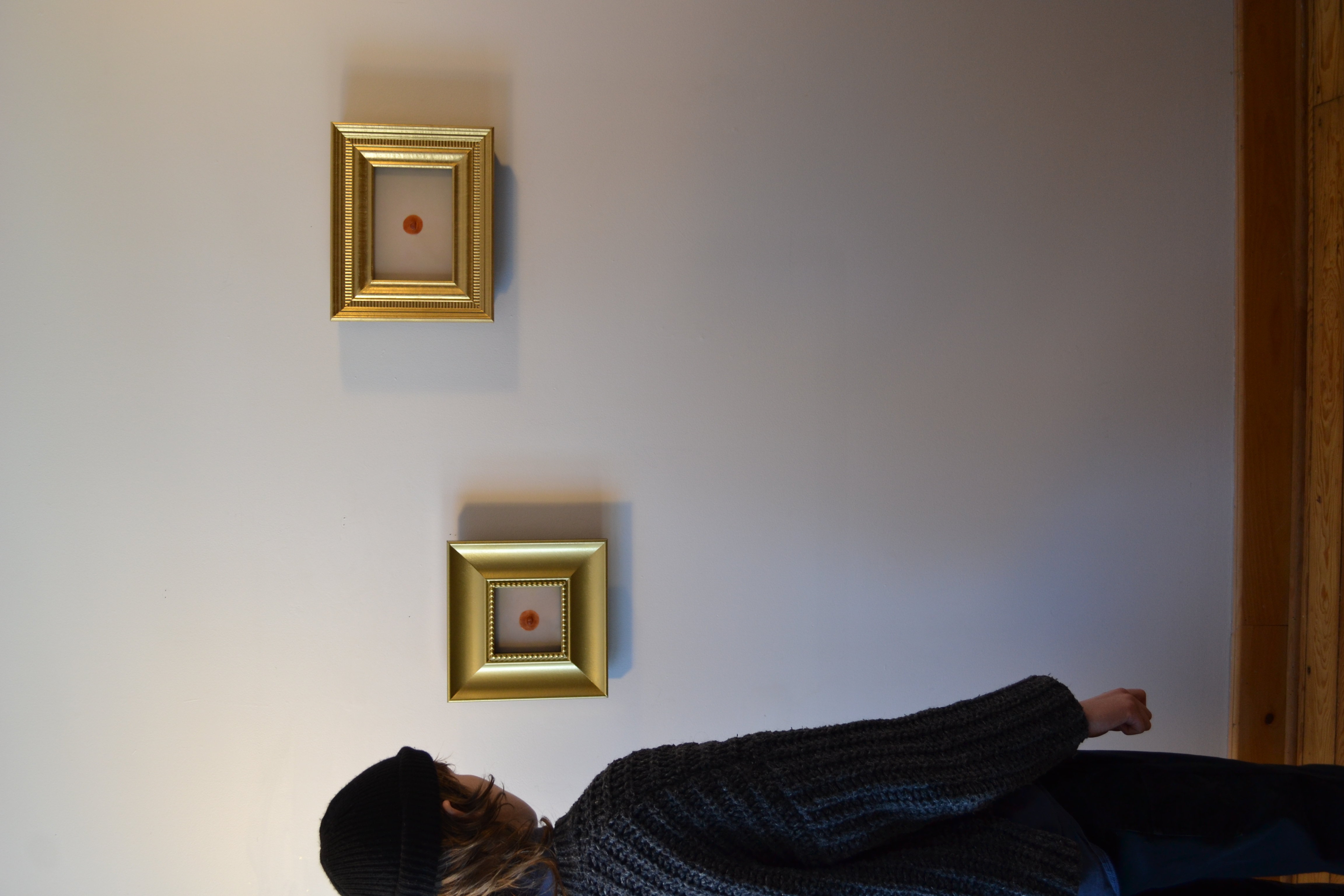
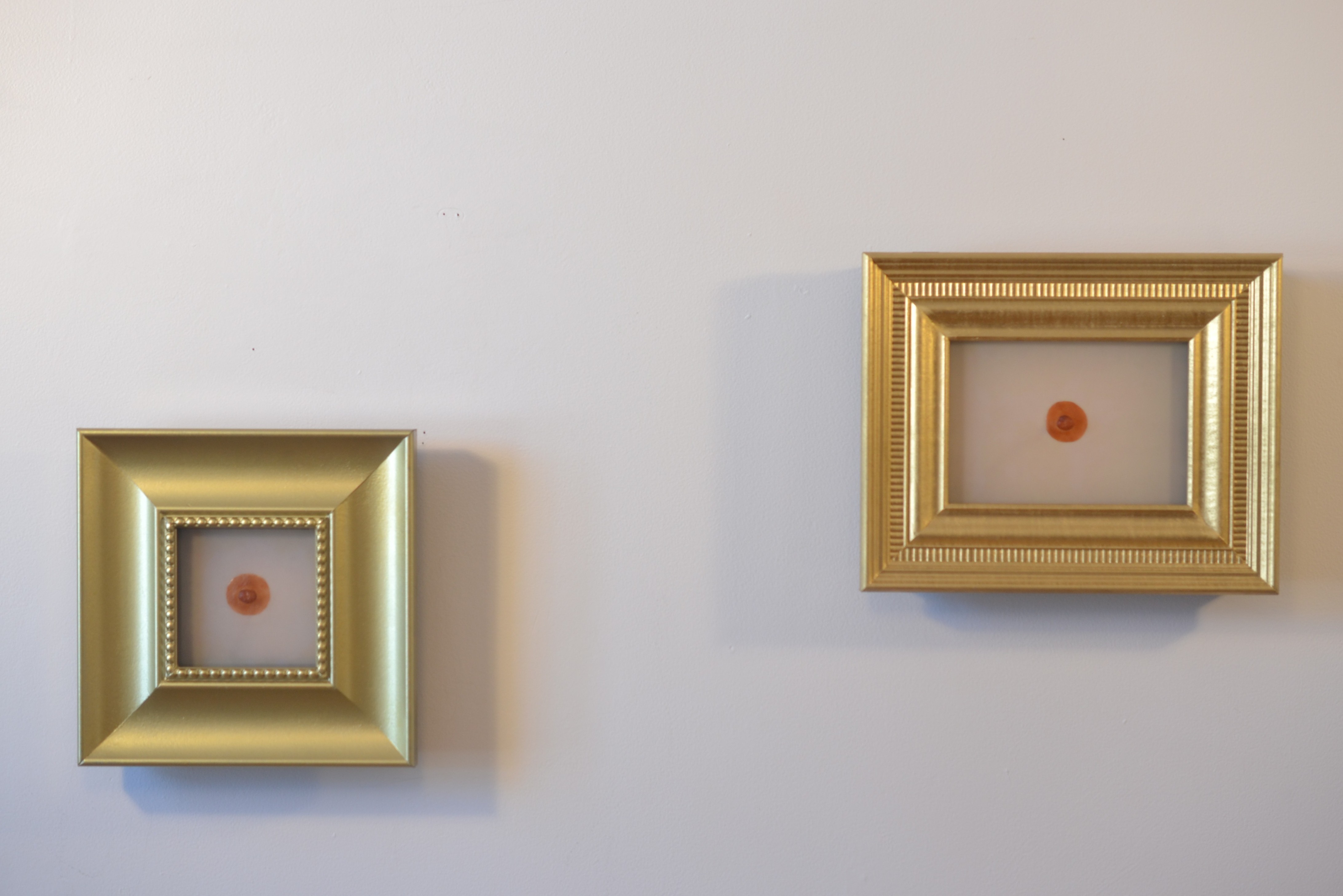
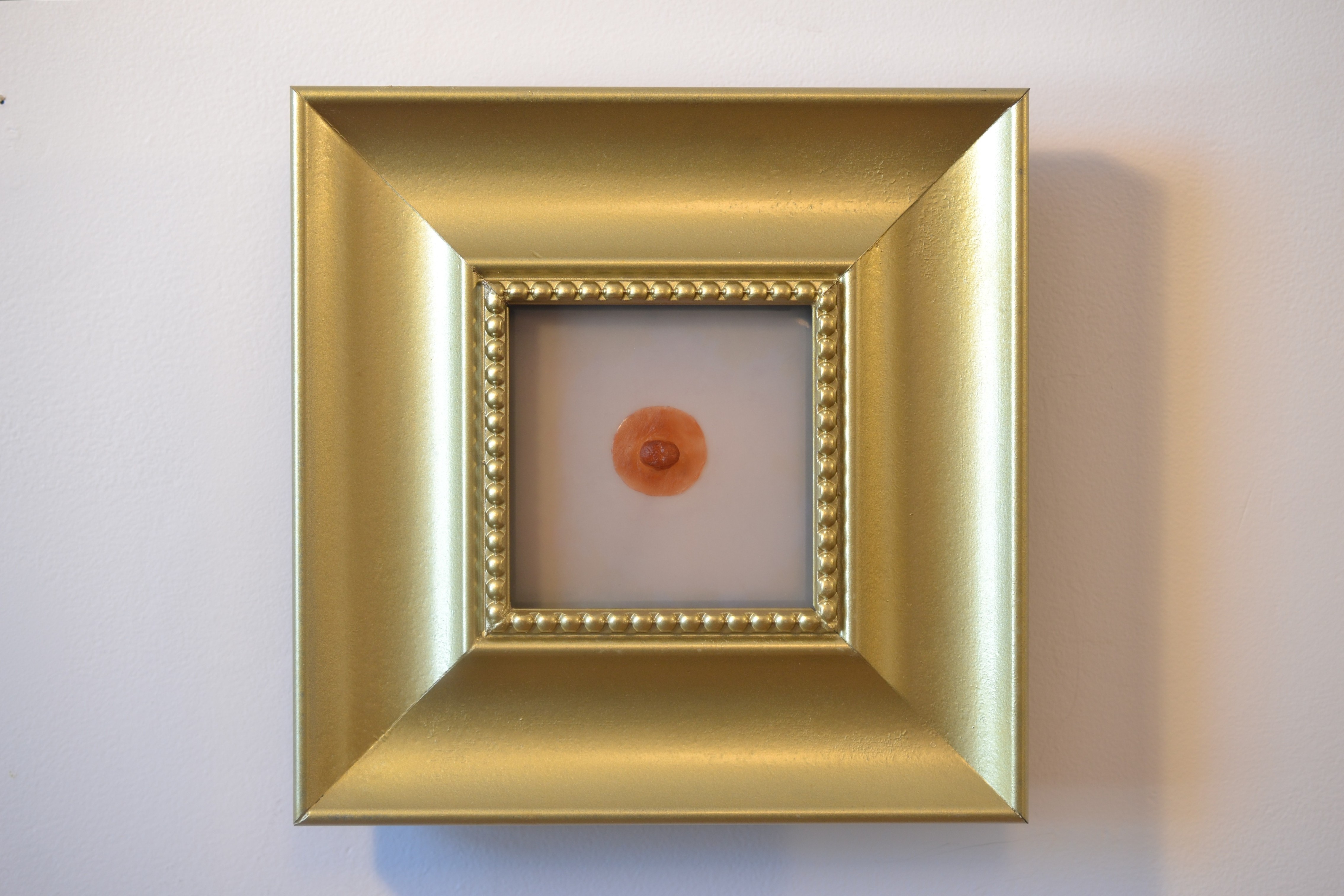
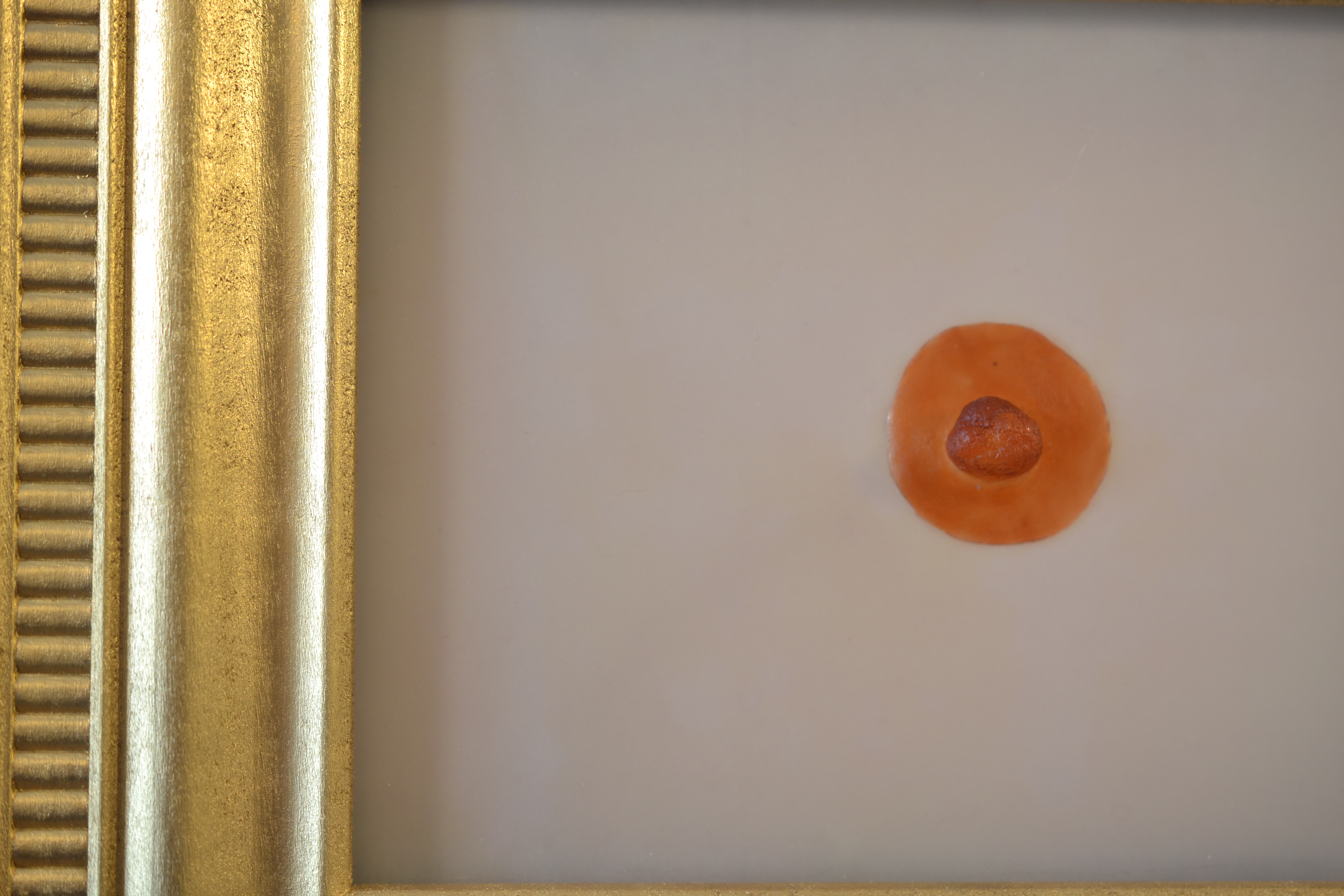


This project has been a really fun excuse to adapt and improve my real-time embedded system design skills for battery powered systems. Each framed sculpture uses a small USB battery to run and relies on a PIR sensor placed in the gallery space which hosts a local MQTT network. As viewers walk in and out of the space the PIR sensor triggers the nipples to inflate and deflate.
Software Diagram
┌──────────┐──────────┐
│ESP32 PICO│          │
└──────────┘          │
│                     │
│ -MQTT broker        │
│ -PIR sensor trigger │
│               │     │
└───────────────┼─────┘
                │
              PIR trigger
              over MQTT
                │
┌──────────┐────┼──────┐
│ESP32 PICO│    ▼      │
└──────────┘           │
│┌───────────────────┐ │
││core 0             │ │
││                   │ │
││-MQTT handler      │ │
││-OTA update handler│ │
││-pressure monitor  │ │
││-status webpage    │ │
│└───────────────────┘ │
│┌───────────────────┐ │
││ core 1            │ │
││                   │ │
││-pump management   │ │
││-main state machine│ │
│└───────────────────┘ │
└──────────────────────┘
Much of the work in my personal practice
deals with controlling liquids and air moving through pumps. Typically, I
use ESP32s that message each other over local MQTT network to control
the state of the sculptures. After the initial design of this work I
decided to rewrite my standard state machine firmware to use FreeRTOS
techniques to take better advantage of the multicore ESP32s and more
advanced motor control. The final result is a task and queue based
system that can manage GPIO operations, WiFi connectivity, and state
monitoring in a much more robust way.
My favorite part of this project was learning how to control very small pumps more efficiently. Though I use pumps all the time in my work, I spent a lot of extra time sourcing and testing very small salvaged pumps from eBay in order to maintain the small form factor of the piece. The pumps needed to operate a fairly low and often fluctuating voltage because the artworks run on small USB battery packs. By adding a kick pulse ramping sequence into the motor control I was able to reduce the amount of current spike when the pumps starts up, while simultaneously maintaining functionality at lower duty cycles.
I always like to have a little monitoring webpage for my sculptures so that I can check in on them when I'm nearby and this was a useful moment to improve that system as well.